

Table of Contents
- Why Managing Multiple Construction Subcontractors Matters
- Step 1: Pre-Qualify and Research Your Subcontractors
- Step 2: Define Clear Scope of Work and Deliverables
- Step 3: Establish a Construction Project Communication Plan
- Step 4: Implement Subcontractor Scheduling Best Practices
- Step 5: Use Construction Subcontractor Management Software
- Step 6: Monitor Quality, Safety, and HSE Compliance
- Step 7: Manage Change Orders and Handle Conflicts
- Frequently Asked Questions
Last Updated: September 30, 2026
Why Managing Multiple Construction Subcontractors Matters
Managing multiple construction subcontractors is one of the most critical challenges in construction project delivery. When you’re coordinating electricians, plumbers, framers, concrete crews, and specialty trades on the same site, coordination breaks down fast. Missed schedules cascade into cost overruns. Communication gaps create safety risks. Unclear scope leads to disputes that drain time and money.
The real problem isn’t that subcontractors are difficult to work with. It’s that most general contractors approach subcontractor management with outdated processes: scattered emails, phone calls, site visits that don’t happen, and no centralized document control. The result is predictable: projects run late, budgets balloon, and quality suffers.
Managing multiple construction subcontractors effectively requires a structured system. You need clear scope documents, consistent communication protocols, real-time scheduling visibility, and proactive quality monitoring. This guide walks you through the exact steps to implement that system.
Step 1: Pre-Qualify and Research Your Subcontractors
Before a subcontractor sets foot on your site, you need confidence they can deliver. Pre-qualification filters out unreliable trades before they become a problem.
Start by building a list of potential subcontractors for each trade. Then evaluate each one against consistent criteria. Check references from recent projects. Verify insurance coverage and licensing. Look at their safety record and past performance metrics.
Many general contractors skip this step to move fast. They call a familiar name or take the lowest bid. This is where projects go wrong. A subcontractor who can’t manage their own crew, has insurance lapses, or doesn’t show up when promised will create cascading problems across your entire project schedule.
Check References and Past Performance
Call the last three projects each subcontractor completed. Ask specific questions: Did they finish on time? Did they stay within budget? How was the quality of their work? Would you hire them again?
Pay attention to what the references actually say, not just whether they recommend them. A lukewarm “they were fine” is different from “we’d hire them tomorrow.” Ask about how they handled problems. A subcontractor who communicates well when something goes wrong is worth more than one who disappears.
Request a list of projects they’ve completed in the last two years. Look for relevance to your project type. A concrete contractor who specializes in industrial work may not be your best choice for a residential addition. Whether you’re managing crews for Concrete Contracting, Bathroom Remodeling, Kitchen Renovations, or other specialized trades, past experience in that specific area matters.
Verify Insurance and Licensing
Every subcontractor needs current liability insurance and workers’ compensation coverage. Request a Certificate of Insurance (COI) that names your project as an additional insured. This protects you if something goes wrong on site.
Verify their trade license through the appropriate regulatory body. For electrical work, plumbing, and HVAC, this is non-negotiable. An unlicensed contractor creates liability exposure and may produce work that fails inspection.
Check whether they have any outstanding liens or legal judgments. A subcontractor with a pattern of unpaid supplier invoices will create friction downstream.
Step 2: Define Clear Scope of Work and Deliverables
The single biggest source of disputes between general contractors and subcontractors is unclear scope. When the subcontractor thinks they’re responsible for one thing and you think they’re responsible for another, conflict is inevitable.
Write a detailed scope of work document for each subcontractor. Include what they will do, what they won’t do, what materials they provide, what the general contractor provides, and what the completion standard is. Reference the drawings and specifications. Call out exclusions explicitly.
Example: “Electrical scope includes rough-in wiring, outlet installation, and panel upgrades per electrical drawings dated [date]. Scope excludes light fixtures, which will be installed by owner’s selected vendor after electrical rough-in is complete.”
Be specific about quality standards. “High-quality workmanship” means nothing. “All drywall joints taped, mudded, and sanded smooth per industry standard for a painted finish” is actionable.
Include start and end dates. Include what “complete” looks like. If the subcontractor doesn’t know what done looks like, they can’t deliver it.
Step 3: Establish a Construction Project Communication Plan
A construction project communication plan is your control system. It defines who talks to whom, when, and about what. Without it, information gets lost, decisions don’t get made, and problems compound. Clear documentation of these exchanges also serves as the foundation for accurate construction business bookkeeping, ensuring that every financial commitment is tracked alongside the project timeline.
Start by identifying the key stakeholders: the general contractor (you), each subcontractor, the architect or engineer, the owner, and any inspectors. Define the communication chain. Who reports to whom? Who makes decisions about what?
Create a schedule for regular coordination meetings. Weekly is standard for active projects. Use the same day and time every week so people plan around it. Make attendance mandatory for subcontractor leads.
Create a project communication log. Every decision, change, delay, or issue gets documented with a date, who reported it, and what the resolution was. This log becomes your project record. It protects you if disputes arise later.
Schedule Regular Coordination Meetings
Hold a job site coordination meeting every week when the project is active. This is where all subcontractors come together to align on the schedule, discuss conflicts, and surface problems before they become crises.
Run the meeting tight. Thirty minutes is usually enough. Review the week’s work, confirm next week’s schedule, identify conflicts or delays, and assign action items with owners and due dates.
Document the meeting. Who attended, what was discussed, what was decided. Email the notes to all attendees the same day so there’s no ambiguity about what was agreed.
Document All Changes and RFIs
A Request for Information (RFI) is how you handle ambiguities in the drawings or specifications. A subcontractor finds something unclear and submits a written question. You coordinate the answer with the architect or engineer and respond in writing.
Never handle RFIs verbally. Someone will misremember what was said. Create a simple RFI log. Each RFI gets a number, a date submitted, a description, who submitted it, and the date it was resolved.
Change orders are how you handle scope changes.
Step 4: Implement Subcontractor Scheduling Best Practices
The project schedule is your most important tool for managing multiple construction subcontractors. It shows when each trade needs to work, how long they have, and what depends on what.
Coordinate Sequencing to Avoid Conflicts
Sequencing is the order trades work in. Get it wrong and you have multiple crews fighting for space, sharing one ladder, or waiting for work that’s not done.
Build Buffer Time Into Your Schedule
A schedule with no buffer time is a schedule that will slip. Build in contingency time for weather delays, material deliveries that arrive late, or unexpected site conditions.
Step 5: Use Construction Subcontractor Management Software
Paper and email don’t scale when you’re managing multiple construction subcontractors. Digital tools give you visibility into what’s happening on site and what’s coming next.
Look for software that includes:
- Document control with version history
- A shared schedule all trades can see
- An RFI and change order system
- A daily site report tool so crews can log what they did and what’s blocking them
- Mobile access so subcontractors can check the schedule or submit photos from the site
- Integration with email so notifications reach people where they work
Step 6: Monitor Quality, Safety, and HSE Compliance
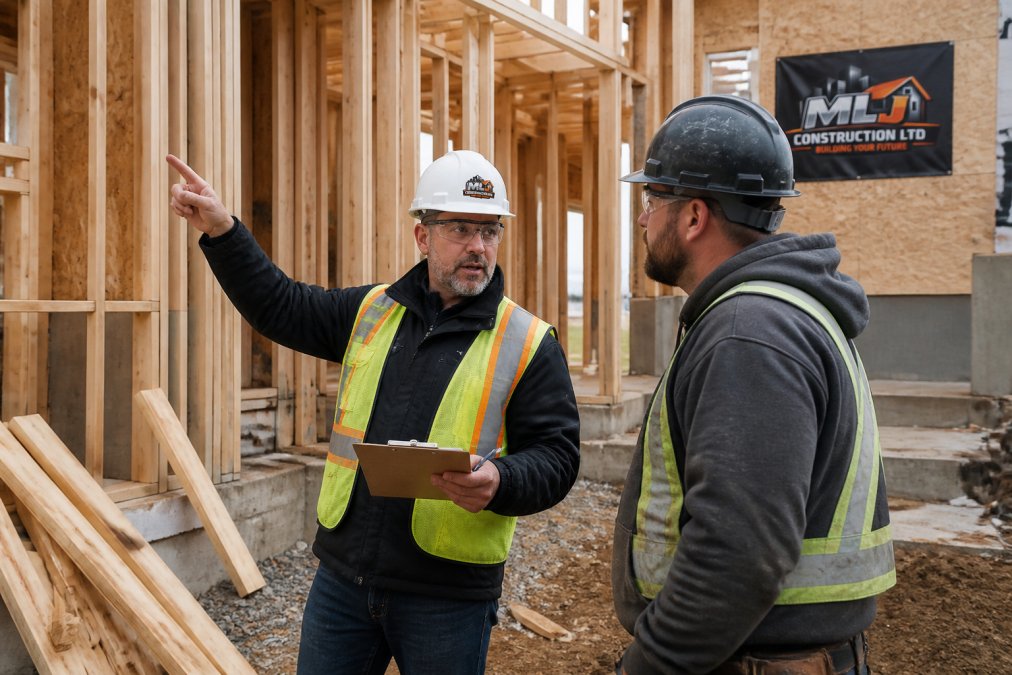
Conduct Regular Site Inspections
Walk the site at least twice a week. Look at the work being done. Check that it matches the drawings and specifications. Look for safety hazards: trip hazards, fall hazards, exposed electrical, improper scaffolding.
Track Health, Safety, and Environment Obligations
Every subcontractor must follow workplace health and safety regulations. In most provinces, this means compliance with occupational health and safety legislation and with the specific requirements of your project.
Step 7: Manage Change Orders and Handle Conflicts
Change orders are normal on construction projects. Owners change their minds. Unexpected site conditions emerge. The question is how you manage them.
Process Change Orders in Writing
When a change is needed, write it down. Describe what’s changing, who requested it, why it’s changing, what the cost is, and what the schedule impact is.
Resolve Disputes Before They Escalate
Most disputes start small. A subcontractor thinks they’re owed more for extra work. You think the work was already included in their scope. If you address it immediately, you can usually find agreement.
Frequently Asked Questions
What are the best practices for managing multiple construction subcontractors effectively?
Pre-qualify subcontractors by checking references and insurance, define clear scope of work in writing, establish a communication plan with regular coordination meetings, use scheduling software to avoid conflicts, monitor quality and HSE compliance through site inspections, and document all changes and RFIs. Treat each subcontractor as accountable for their specific deliverables while maintaining centralized document control so all parties stay aligned.
What should a construction project communication plan include?
A solid communication plan specifies meeting frequency (daily toolbox talks, weekly site coordination meetings), designates a single point of contact for escalation, establishes protocols for RFIs and drawing revisions, defines how change orders are requested and approved, and sets expectations for field reporting. Include contact information for all subcontractors, architects, and engineers, and use digital collaboration tools to ensure everyone accesses the same current documents.
How do I handle scheduling conflicts between multiple subcontractors?
Coordinate sequencing upfront so trades don’t overlap unnecessarily. Use construction subcontractor management software to visualize the timeline and identify conflicts early. Build buffer time into your schedule for weather delays or unexpected issues. Hold weekly scheduling meetings to review progress and adjust as needed. If conflicts arise, prioritize the critical path and communicate changes immediately to all affected parties in writing.
What legal requirements apply to subcontractor agreements in construction projects?
Subcontractor agreements must clearly define scope of work, payment terms, insurance and liability requirements, and HSE compliance obligations. Ensure subcontractors carry appropriate coverage (general liability, Workers’ Compensation) and obtain signed lien waivers before final payment. Document all contractual terms in writing and keep records throughout the project lifecycle. Consult with a legal professional familiar with provincial construction law to ensure your agreements protect both parties.