Table of Contents
- What Design-Build Services Deliver and Why They Matter
- Design-Build vs Architect and General Contractor: Which Approach Works for You
- How to Vet and Hire a Design-Build Firm: A Step-by-Step Process
- Step 1: Define Your Project Scope and Budget
- Step 2: Research Local Firms and Review Their Portfolios
- Step 3: Verify Licensing, Insurance, and Coverage
- Step 4: Clarify Who Pulls Permits and Handles Inspections
- Step 5: Request Multiple Quotes and Compare Proposals
- Step 6: Check References and Ask the Right Questions
- Step 7: Make Your Selection and Get It in Writing
- Questions to Ask a Design-Build Firm Before You Commit
- Understanding Your Design-Build Renovation Contract
- Red Flags and How to Spot Them Early
- Frequently Asked Questions
Last Updated: October 12, 2026
What Design-Build Services Deliver and Why They Matter
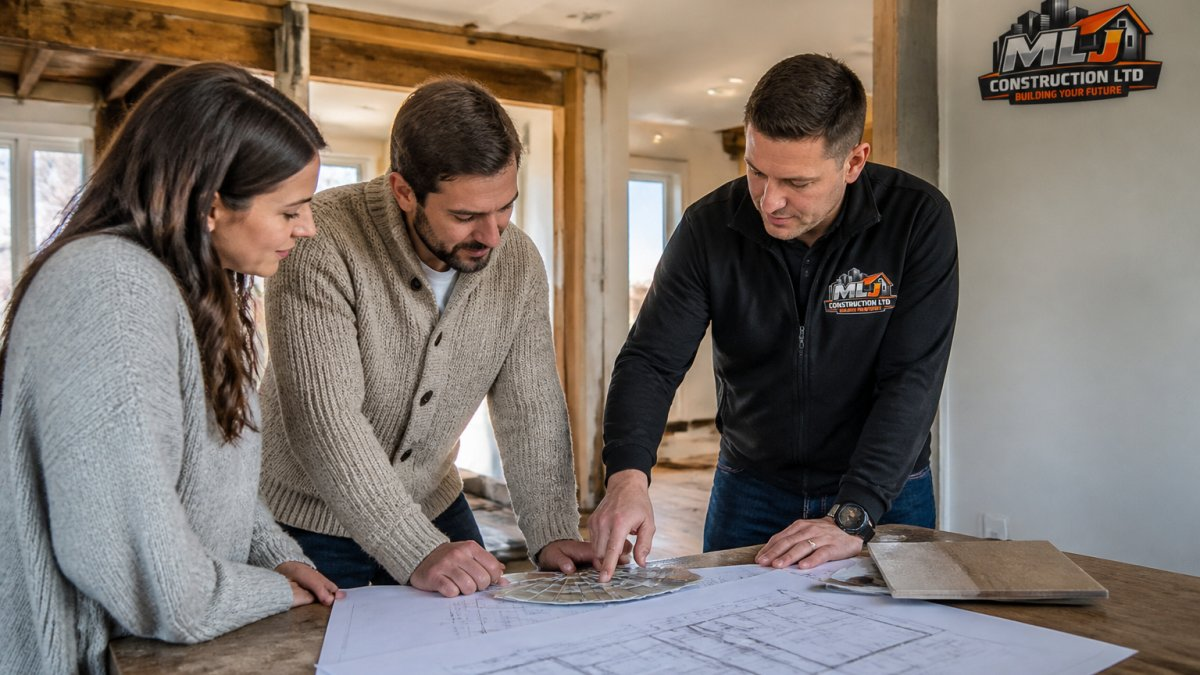
A design-build firm is a single contracting entity managing both architectural design and construction under one roof.
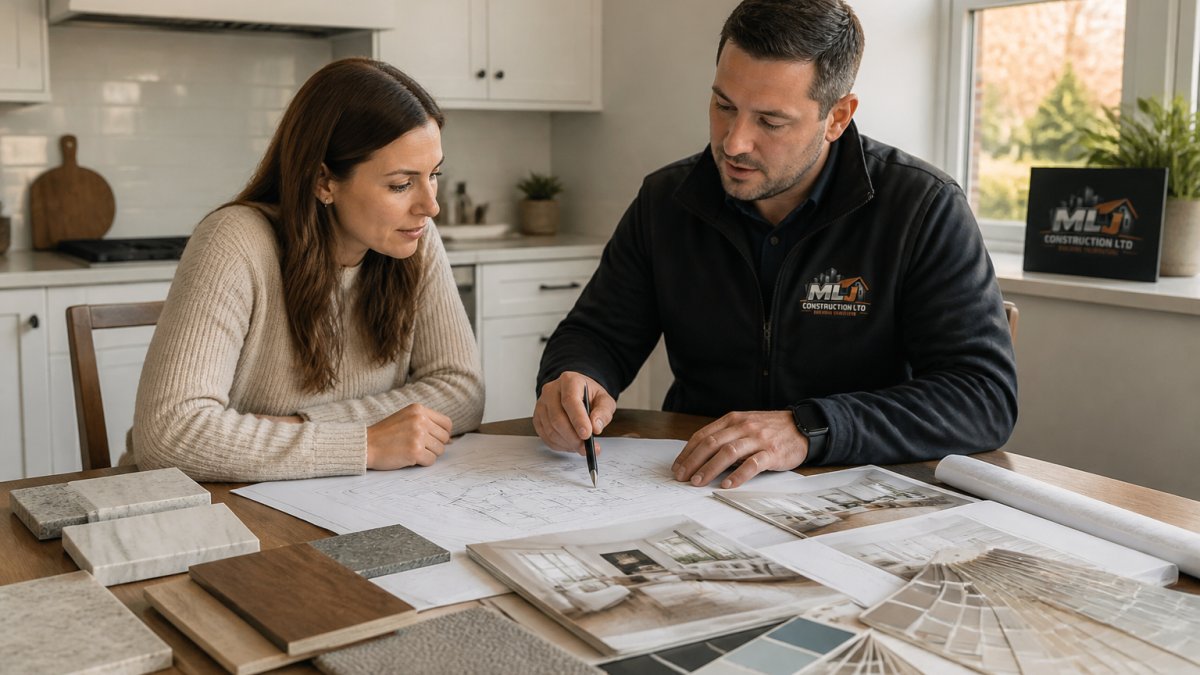
This eliminates a common source of friction: miscommunication between designers and builders.
At MLJ Construction Ltd., we manage design-build projects across residential, commercial, and industrial sectors, leveraging relationships with architects and engineers to deliver on schedule and within budget.
The real advantage of design-build isn’t just convenience, it’s cost control. When the designer and builder are accountable to the same budget, they make smarter material and method choices early, before changes become expensive.
Design-Build vs Architect and General Contractor: Which Approach Works for You
The traditional model, hiring an architect first, then a general contractor, works well for complex custom homes where architectural vision drives design without construction constraints.
But this separation creates friction.
Design-build flips this: the contractor is involved from the start, so material costs, buildability, and schedule implications are discussed while the design is still on paper.
| Approach | Best For | Timeline | Cost Control | Design Flexibility |
|---|---|---|---|---|
| Architect + General Contractor | Complex custom projects, architectural vision-first | Longer (separate phases) | Variable (changes common) | High (design-driven) |
| Design-Build Firm | Budget-conscious, schedule-tight, integrated approach | Shorter (parallel phases) | Strong (built-in accountability) | Moderate (practical focus) |
How to Vet and Hire a Design-Build Firm: A Step-by-Step Process
Hiring the right design-build firm is the most important decision you’ll make for your renovation. A strong firm saves money and stress; a weak one wastes both. These due-diligence steps protect you before money changes hands. Establishing clear communication protocols early on creates a foundation for managing renovation stress throughout the entire construction process.
Step 1: Define Your Project Scope and Budget
Before you contact any firm, get clear on what you want to build and what you can spend. Scope means specifics: kitchen only or whole main floor? Bathroom remodel or full addition? The more specific you are, the more accurate your quotes. Decide on a realistic budget and communicate it upfront so firms design to it.
Step 2: Research Local Firms and Review Their Portfolios
Identify firms with relevant experience. Look for portfolios showing completed projects similar to yours, for a kitchen renovation, see kitchens they’ve actually built, not just renderings. Check reviews on Google, the Better Business Bureau, and industry directories; multiple complaints about the same issue, missed deadlines, cost overruns, poor communication, is a red flag. Ask for references and call past clients: Did the project stay on schedule?
Step 3: Verify Licensing, Insurance, and Coverage
This is the step most homeowners skip, and the one that matters most if something goes wrong. Ask for proof of:
- Business registration, confirm the company is registered and in good standing in your province or territory.
- General liability insurance, request a certificate and confirm the coverage suits your project size. Call the insurer to verify it’s current, not a years-old photocopy.
- Workers’ compensation coverage, most provinces require it for employees. Ask for the clearance letter or account number and verify it with the provincial board.
If a firm is evasive about any of these, treat it as a serious warning sign. A legitimate firm will have these documents ready.
Step 4: Clarify Who Pulls Permits and Handles Inspections
Permits are a common source of confusion and delay. Ask directly: Will you pull the building permit or am I? Who schedules inspections?
In most cases, the design-build firm should handle permits.
A reputable firm schedules inspections at required stages and won’t proceed until they pass. If a firm suggests skipping inspections or working without permits, walk away.
Step 5: Request Multiple Quotes and Compare Proposals
Get proposals from at least three firms to establish a range and spot outliers. A significantly lower quote may mean corner-cutting or underestimated scope; a significantly higher one may mean overcharging. Compare apples to apples: ensure each proposal covers the same scope, since some firms exclude permits, inspections, or cleanup and the differences add up fast.
A proposal that’s missing scope details or assumes things you haven’t agreed to yet is a warning sign. Scope creep, where the project expands beyond what was quoted, is one of the most common sources of cost overruns. Insist on clarity before you sign.
Step 6: Check References and Ask the Right Questions
When you call references, don’t just ask “were you happy?” Ask questions that reveal how the firm behaves when things go wrong:
- Did the project finish on the timeline given? If not, what caused the delay and how was it communicated?
- Did the final cost match the quote? If not, how were change orders handled?
- How did the firm handle problems or surprises during construction?
A firm with a strong track record will have references who answer without hesitation. Vague or coached-sounding references are a signal.
Step 7: Make Your Selection and Get It in Writing
Once you’ve compared quotes, verified credentials, and checked references, choose the firm that best fits your priorities, not just the lowest price. The cheapest quote often becomes the most expensive project once change orders and delays are factored in.
Before work begins, get everything in writing: scope, timeline, payment schedule, change-order process, and warranty terms.
Questions to Ask a Design-Build Firm Before You Commit
Before you hire, have a conversation that goes beyond the estimate. Ask these questions:
How will you handle design changes once we start? Do changes require written approval? How are they priced? A firm with a clear change-order process is more professional than one that says “we’ll figure it out.”
How do you manage the budget? Do you track costs weekly and alert me if we’re trending over budget?
What’s included in your price, and what’s not? Clarify permits, inspections, site cleanup, and disposal.
Can you show me similar completed projects? Request photos of finished work, not renderings, plus client references you can call.
What’s your communication process? How often will you update me? Who do I contact with questions? Clear communication prevents misunderstandings.
Understanding Your Design-Build Renovation Contract
Your contract protects both you and the firm. Don’t sign anything you don’t understand. Here’s how to evaluate the key terms.
Scope of Work: The Most Important Section
The scope of work should be detailed enough that a stranger could read it and understand exactly what’s being built. It should list:
- Inclusions, every material, fixture, and finish, with brands or quality levels where possible.
- Exclusions, what’s explicitly not included. If landscaping, painting, or appliance installation isn’t in the contract, it’s not in the price.
- Allowances, for unselected items (tiles, fixtures, lighting), the contract should state an amount. Choose above it and you pay the difference. Ask how allowances were set and whether they’re realistic.
“Renovate kitchen” is not a scope. Cabinet specifications, countertop material, plumbing fixture models, and electrical work are.
Payment Schedule: What’s Fair
A fair payment schedule ties payments to completed milestones, not calendar dates. A common structure:
- A deposit at signing (often 10-20%, varying by province and project size)
- Progress payments as phases complete (framing, rough-in, drywall, finishes)
- A final payment held back until completion and your inspection
Be cautious of large upfront payments or payment before work is done, the deposit should cover initial mobilization and materials, not the whole project. Also confirm whether the firm holds a holdback, which many provinces require under construction lien legislation to protect against subcontractor claims.
Change Orders: How They Should Work
Change orders are where budgets go to die if the process isn’t clear. A well-run firm has a written process:
- Written request, you or the firm identifies a change.
- Written pricing, the firm provides cost and timeline impact before work proceeds.
- Written approval, you sign off before the change is made.
No verbal agreements, no “we’ll sort it out at the end.” If a firm resists written change orders, that’s a red flag.
Timeline and Milestones
The contract should include a start date, key milestones (design completion, permit approval, rough-in inspection, final walkthrough), and a substantial completion date, plus what happens if the timeline slips, penalties, delay communication, and valid delay causes (permit backlogs, material shortages, exterior weather).
A firm that won’t commit to a timeline in writing won’t be held to one.
Warranty Terms
Ask what the warranty covers and for how long. Typical coverage:
- Workmanship warranty, covers installation defects, often one to two years.
- Manufacturer warranties, for materials and products, usually passed through to you.
- Structural warranty, for major structural work, if applicable.
Get warranty terms in writing and understand what voids coverage, a clause requiring the firm for all maintenance, for example, may be more restrictive than it appears.
Insurance and Liability
The contract should confirm the firm carries general liability insurance and workers’ compensation coverage, and that it’s responsible for its subcontractors. Verify the certificates, if a worker is injured on your property and the firm lacks coverage, you could be exposed.
Clauses to Watch For
- Automatic escalation clauses, some contracts let the firm raise prices for material cost increases without your approval. Check whether this exists and how it’s capped.
- Broad termination clauses, what happens if you cancel? What penalties apply, and what work is paid for?
- Dispute resolution, mediation, arbitration, or court? Understand the process before you need it.
The contract is your insurance policy. A clear, detailed contract prevents disputes because both parties know exactly what they agreed to. If a clause is vague, ask for it to be clarified in writing before you sign.
Get It Reviewed If You’re Unsure
If the contract is complex or the project value significant, have a lawyer review it before signing. The cost is small compared to a dispute, and a reputable firm won’t object.
Red Flags and How to Spot Them Early
Some warning signs appear before you hire, others during the project. Knowing what to look for helps you avoid costly mistakes.
Reluctance to provide references or examples. A firm with good work should be proud to show it.
Unwillingness to discuss insurance or liability. Every firm should carry general liability insurance and workers’ compensation coverage.
Hiring a design-build firm is a significant investment.
At MLJ Construction Ltd., we’ve built our reputation on delivering projects on schedule and within budget. If you’re planning a renovation, we’d welcome the chance to show you how our process works. Get a quote and see how we can transform your vision into reality.
Frequently Asked Questions
What should I look for when hiring a design-build firm for a renovation?
Look for firms with a portfolio of completed projects similar to yours, verifiable client references, proper licensing and insurance, and transparent communication about timelines and costs. Ask about their experience managing projects in your area and how they handle changes or unexpected issues. A strong design-build firm should demonstrate a collaborative approach and willingness to explain their process clearly.
What questions should I ask a design-build contractor before hiring them?
Ask about their experience with your project type, how they manage budgets and schedules, their team’s qualifications, insurance coverage, warranty details, and how they handle change orders. Request references from recent clients and ask how they communicate during the project. Understanding their process for handling permits, inspections, and unforeseen conditions will help you avoid surprises later.
Is design-build better than hiring an architect and general contractor separately?
Design-build offers a single point of contact, typically faster timelines, and better cost control because the design and construction teams collaborate from the start. Hiring separately gives you more flexibility but requires you to manage multiple vendors and risks miscommunication between teams. Design-build works best for projects where you want streamlined delivery and cost certainty; separate hiring suits projects where you want more control over design decisions.
What should a design-build renovation contract include?
Your contract must specify the project scope, timeline, total cost, payment schedule, warranty terms, and how change orders are handled. It should outline responsibilities for permits and inspections, insurance and liability coverage, and dispute resolution. Include details on materials, finishes, and quality standards. Ensure the contract defines what happens if the project runs over budget or schedule, and clarify post-construction follow-up and warranty coverage.
What are red flags when choosing a design-build contractor?
Be cautious of firms unwilling to provide references, those quoting significantly lower than competitors, or contractors who pressure you to decide quickly. Red flags include vague contracts, reluctance to discuss timelines or cost breakdowns, lack of proper licensing or insurance, and poor communication. Avoid contractors who promise unrealistic timelines, won’t explain their process, or have a history of disputes with clients.
How do design-build firms estimate renovation costs?
Design-build firms typically estimate costs by analyzing your project scope, materials, labour, and local market conditions. They factor in design complexity, site conditions, and timeline. A detailed estimate should break down labour, materials, permits, and contingency. Ask your firm to explain how they arrived at their estimate and whether it includes all costs or if additional fees may apply as the design develops.