
Table of Contents
- Understanding Construction Budget Overruns and Their Causes
- Step 1: Establish Accurate Cost Estimation and Pre-Construction Planning
- Step 2: Calculate and Allocate Your Construction Contingency Fund
- Step 3: Implement a Construction Budget Template for Owners
- Step 4: Manage Change Orders and Project Scope Creep
- Step 5: How to Manage Construction Subcontractors Effectively
- Step 6: Monitor Budget Performance and Enable Transparent Reporting
- Frequently Asked Questions
Last Updated: October 9, 2026
Understanding Construction Budget Overruns and Their Causes
Construction projects rarely stay on budget without careful planning and management. Budget overruns happen when actual costs exceed what you planned to spend. Understanding why they occur is the first step to avoid construction budget overruns.
Common causes include poor cost estimation, unexpected site conditions, material price increases, and scope creep. When you don’t account for these factors upfront, costs climb fast. The good news: most budget overruns are preventable with the right approach.
This guide shows you how to avoid construction budget overruns before they start.
Step 1: Establish Accurate Cost Estimation and Pre-Construction Planning
Accurate cost estimation is the foundation of budget control. You cannot manage what you haven’t measured. Start by breaking down your project into detailed line items, then choose an estimation method that matches your project’s stage and risk profile.
Work with your team to identify every cost category:
- Materials and labor
- Equipment rental
- Permits and inspections
- Site preparation and cleanup
- Contingencies and reserves
Match the estimation method to the project stage. A common pattern in the industry is to move through three levels of precision:
- Order-of-magnitude (concept): Rough per-square-foot or per-unit figures used for feasibility. Useful for early go/no-go decisions, but too loose to budget against.
- Preliminary or design-development estimate: Built from major assemblies (foundation, framing, envelope, mechanical, electrical) once drawings are partly developed. This is where most owners first see a realistic number.
- Definitive or construction-document estimate: Line-item pricing from current supplier and subtrade quotes against completed drawings. This is the number you should actually budget from.
A frequent mistake is treating a concept-stage number as a definitive budget. When the detailed estimate lands higher, the project is already “over budget” before a shovel moves. Label every estimate with its precision level and date so no one confuses the two.
Account for optimism bias. Research in project management consistently finds that people systematically underestimate cost and time on their own projects, even when they know similar projects ran over. This is optimism bias, and it is not a character flaw, it is a predictable human pattern. Counter it with three habits:
- Reference class forecasting. Instead of estimating from the bottom up alone, ask what similar projects actually cost. If your last three kitchen renovations finished 12% over their initial estimate, apply that uplift to the new estimate rather than assuming this time will be different.
- Separate the estimator from the advocate. The person who wants the project approved has an incentive to keep the number low. Have someone without that incentive review the estimate and challenge the assumptions.
- Estimate ranges, not points. Present a low, likely, and high figure. Budget from the likely-to-high end. A single-point estimate invites false confidence.
A solid pre-construction planning phase catches problems early. Review architectural drawings with your contractor. Walk the site together. Discuss potential obstacles such as soil conditions, access constraints, and service locations. This upfront work prevents costly surprises later.
Get multiple quotes for major materials and subcontracted work. Price variations can be significant, and competition keeps costs realistic. Compare not just price but also timeline and quality guarantees. Where a quote is far below the others, treat it as a scope question, not a bargain.
Document everything in writing. A clear scope of work prevents misunderstandings that lead to disputes and cost overruns. The time you invest in planning saves money during construction, and the estimate you build from it is only as good as the assumptions written down beside it.
Step 2: Calculate and Allocate Your Construction Contingency Fund
A contingency fund is your financial buffer for unexpected costs. Most projects face surprises, hidden damage, code violations, material shortages. Your contingency fund covers these without derailing your budget.
Calculate your contingency fund as a percentage of total project cost:
- Residential renovations: 10-15% contingency
- Commercial fit-outs: 15-20% contingency
- Industrial or complex projects: 20-25% contingency
Set aside this money before construction starts. Do not treat it as profit or savings. Treat it as essential project funding.
Never spend your contingency fund on scope creep or optional upgrades. Reserve it strictly for genuine emergencies and unexpected costs. Once it’s gone, you have no buffer.
Track contingency spending carefully. When you use funds, document why. At project end, review what drove contingency costs. This data improves your estimates on future projects.
Step 3: Implement a Construction Budget Template for Owners
A construction budget template keeps costs organized and visible. Use a simple spreadsheet or project management tool to track every expense category and actual spending.
Your template should include:
- Line item description
- Estimated cost
- Actual cost to date
- Variance (difference between estimated and actual)
- Budget status (on track, over, under)
Update your budget monthly. Compare actual spending to estimates. When variances appear, investigate immediately. Small overruns compound into large ones if ignored.
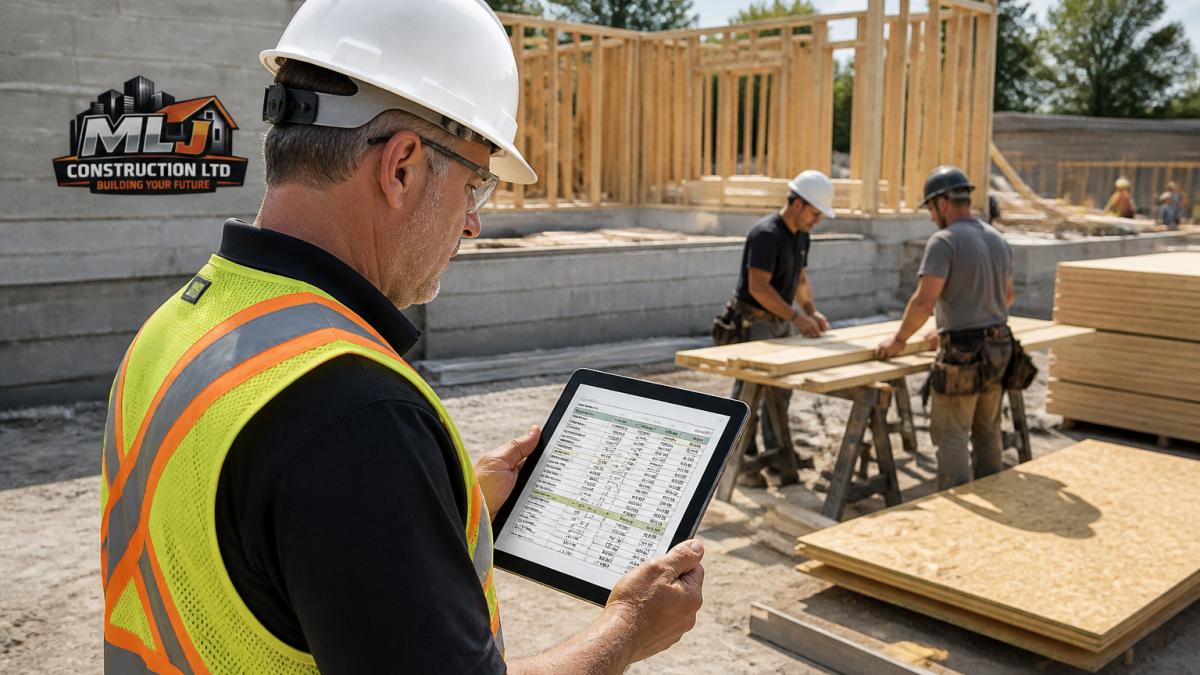
Assign one person to manage the budget template. This person tracks invoices, updates figures, and alerts the team to variances. Clear ownership prevents gaps and errors.
Your budget template is a living document. It guides decisions throughout the project. Without it, you’re flying blind, spending money without knowing whether you’re on track.
Step 4: Manage Change Orders and Project Scope Creep
Scope creep kills budgets. Small changes add up. A different tile choice here, upgraded fixtures there, a new wall there, suddenly you’re thousands over budget.
Every change must be documented in a change order. A change order includes:
- What is changing
- Why it’s changing
- Cost impact (increase or decrease)
- Timeline impact
- Approval signatures
Require written approval before any work changes. Verbal agreements lead to disputes about cost and scope. Written change orders protect both you and your contractor.
Set a clear change order approval process. Define who can approve changes and up to what dollar amount. Changes above that threshold need higher-level sign-off. This prevents unauthorized spending.
Before approving a change order, ask: Is this change necessary? Can we defer it to a later phase? What’s the true cost including labor and materials? A 10-minute conversation saves thousands in unexpected expenses.
Track all change orders in one place. Review them monthly. If changes are frequent, investigate why. Poor planning or unclear scope causes change orders. Fix the root cause.
Step 5: How to Manage Construction Subcontractors Effectively
Subcontractors drive much of your project cost. Poor subcontractor management leads to delays, rework, and cost overruns. Clear contracts and regular communication prevent problems.
Before hiring a subcontractor, verify:
- Current licenses and insurance
- References from recent projects
- Fixed-price quotes in writing
- Timeline commitments in writing
Use fixed-price contracts for subcontracted work whenever possible. This shifts cost risk to the subcontractor, who has control over labor and efficiency. Time-and-materials contracts are riskier, costs can spiral if work takes longer than expected.
Schedule regular site meetings with subcontractors. Review progress, discuss issues, and confirm timelines. Catch problems early before they become expensive.
Never pay a subcontractor in full before work is complete. Withhold final payment until you’ve inspected the work and it meets specifications. This ensures quality and gives you use if corrections are needed.
Document all subcontractor work. Take photos of completed phases. Keep records of hours worked and materials used. This documentation protects you if disputes arise later.
Step 6: Monitor Budget Performance and Enable Transparent Reporting
Real-time budget monitoring catches overruns before they spiral. Weekly or bi-weekly reviews keep everyone aligned on spending and progress.
Create a simple budget report that shows:
- Total budget
- Spending to date
- Projected final cost
- Variance from budget
- Items driving overages
Share this report with your team and stakeholders. Transparency builds trust. When people see spending in real time, they make better decisions about changes and priorities.
When variance appears, act fast. If you’re trending 5% over budget midway through the project, you’ll be significantly over at completion. Adjust scope, reduce costs, or increase budget now, don’t wait until the end.
Hedge against supply chain and material price volatility
Material prices and lead times have become one of the least predictable line items on many projects. A budget that was accurate at signing can drift within weeks. Build these defenses into your monitoring routine:
- Lock pricing early where it is safe to do so. For commodities with volatile pricing, a fixed-price supply agreement or a price-hold window shifts risk to the supplier. Confirm the hold period in writing and note the date it expires.
- Buy long-lead items on a schedule, not on demand. Identify items with long lead times (switchgear, custom millwork, specialty glazing, certain mechanical equipment) and order them as soon as drawings allow. Late ordering forces expedited shipping or substitute products, both of which cost more.
- Carry a volatility allowance separate from contingency. A contingency fund is for unknowns; a volatility allowance is for known-but-unpredictable items like steel, lumber, and fuel. Track it as its own line so you can see whether price movement, not scope, is eating your budget.
- Qualify quotes for validity periods. A quote that expires in 30 days is not a locked cost. Note the expiry date in your budget template and re-price before it lapses.
- Consider escalation clauses in your own contracts. If you are passing work to subtrades, an agreed escalation formula for defined materials can prevent disputes when prices move.
Run a post-project audit to close the loop
Most owners never learn why a project went over or under budget, so the same errors repeat. A short audit at closeout fixes that. Capture the following in a one-page template:
- Original estimate vs. final cost, by category. Where was the estimate accurate, and where did it miss?
- Contingency and volatility allowance used. How much was spent, on what, and was it a genuine unknown or something that should have been forecast?
- Change orders. Count them, total their value, and classify each by cause (owner request, design gap, site condition, regulatory).
- Schedule variance. Did delays drive cost, and what caused the delays?
- Three lessons. Write down what you would estimate or contract differently next time.
Keep the completed audit with the project file. When you estimate the next project, pull the last two or three audits and apply the observed variances as an uplift. This is how an organization gets measurably better at avoiding construction budget overruns instead of relearning the same lesson.
Budget transparency is a project management tool, not just an accounting exercise. It drives accountability, exposes supply chain drift early, and, when paired with a closeout audit, turns each project into better data for the next one.
Frequently Asked Questions
What are the most common causes of construction budget overruns?
Budget overruns typically result from inaccurate cost estimation, unexpected site conditions, material price escalation, design changes, poor communication between stakeholders, inadequate contingency planning, and delays caused by weather or permitting. Supply chain disruptions and labor productivity issues also contribute significantly. The key is identifying these risks during pre-construction planning and building safeguards into your budget and contract terms from the start.
How do you calculate a contingency fund for a construction project?
Contingency funds typically range from 10-20% of your total project budget, depending on project complexity and risk level. For residential additions or kitchen renovations, 10-15% is standard. For industrial or institutional projects with more unknowns, 15-20% is advisable. Start by identifying specific risks: site conditions, material availability, labor costs, and design complexity. Allocate funds proportionally to each risk category. Document your calculation methodology so stakeholders understand the reasoning and contingency funds aren’t treated as discretionary spending.
What should be included in a construction project budget?
A comprehensive construction budget includes labor costs, materials, equipment rental, permits and fees, insurance, design and engineering services, site preparation, contingency reserves, and overhead. Break costs down by phase: pre-construction, site work, structural work, mechanical/electrical/plumbing, finishes, and closeout. Include subcontractor quotes, procurement timelines, and payment schedules. Using a construction budget template helps ensure nothing is missed and provides a baseline for tracking actual spending throughout the project lifecycle.
How can design-build services help minimize budget risks?
Design-build consolidates design and construction under a single point of contact, eliminating gaps in communication between architects and contractors. This approach enables cost-conscious design decisions early, reduces change orders, and streamlines procurement and resource allocation. A design-build partner can identify cost-saving materials and methods during design rather than discovering expensive conflicts during construction. This integrated approach typically delivers projects on schedule and within budget while maintaining quality and transparency throughout the project.