Table of Contents
- Why You Need a Construction Management Consultation
- How to Choose a Construction Manager
- Preparing for Your Consultation Meeting
- Construction Project Planning Checklist
- Understanding Construction Management Services Cost
- What to Expect During the Consultation
- Common Mistakes to Avoid When Booking a Consultation
- Next Steps After Your Consultation
- Frequently Asked Questions
Last Updated: September 28, 2026
Why You Need a Construction Management Consultation
A construction management consultation is a professional assessment of your building project before work begins. It covers planning, budgeting, timeline development, and risk identification. Without professional guidance, projects typically drift over budget, miss deadlines, and encounter unexpected problems mid-build. A consultation prevents these costly mistakes by establishing clear expectations upfront.
How to Choose a Construction Manager
Look for a construction manager with direct experience in your project type: residential additions, commercial fit-outs, industrial work, or institutional builds each require different expertise. Ask for references from completed projects similar to yours and call them to verify: Did the project finish on schedule? Did costs stay within the original estimate? How did the manager handle problems?
Experience with local building permits and regulations is critical. A manager familiar with local codes, inspection requirements, and approval processes moves your project through faster and avoids costly compliance mistakes.
Choose a manager who serves as your single point of contact, taking ownership of the entire project lifecycle from pre-construction planning through final closeout.
Preparing for Your Consultation Meeting
Gather Project Documentation
Bring all existing documents: architectural drawings, site surveys, photos, and preliminary designs (or sketches if formal drawings don’t exist). Include utility information and details about the building’s age, construction type, and known issues. For new construction, bring site plans and soil reports if available.
Define Your Goals and Timeline
Write down what success looks like for your project. Define your priorities: aesthetics, functionality, efficiency, safety, or other factors specific to your project type.
| Preparation Item | What to Bring | Why It Matters |
|---|---|---|
| Existing drawings or sketches | Architectural plans, photos, site surveys | Helps consultant understand scope and existing conditions |
| Utility and building information | Age, construction type, utility locations | Identifies potential complications and code requirements |
| Budget range | Realistic financial boundaries | Shapes material choices and scope recommendations |
| Timeline requirements | Project deadline and seasonal factors | Determines scheduling and resource allocation |
| Project goals | Written description of desired outcome | Ensures consultant understands your vision |
Construction Project Planning Checklist
The consultant will develop a project plan covering scope definition, site assessment, design coordination, permitting strategy, budget breakdown, construction schedule, subcontractor coordination, safety compliance, quality assurance, risk mitigation, and project reporting. This roadmap prevents scope creep, keeps costs predictable, and ensures every trade knows their role and timeline.
Understanding Construction Management Services Cost
Construction management services are priced in several ways. Understanding these models and the return on investment helps you decide whether hiring a consultant makes financial sense.
Common Pricing Models
Common pricing models include hourly rates, percentage of project cost, fixed fees, and retainers for larger projects. Each model has trade-offs between cost predictability and scope flexibility.
The Cost of NOT Hiring a Consultant
Without professional guidance, projects can exceed budget due to scope creep, inefficient sequencing, and missed code requirements. Schedule delays are common, and rework costs can be significant. A consultant’s fee can prevent overruns and delays that would far exceed that cost.
Real-World Cost-Benefit Examples
A kitchen renovation with a consultant fee can lead to significant savings by preventing overruns. Similarly, commercial fit-outs and industrial projects with professional consultation can avoid substantial costs from overruns and production losses.
When Hiring a Consultant Makes the Most Sense
Consultant fees are most justified for projects with fixed deadlines or budget constraints, projects involving code compliance or complex coordination, or when you lack construction experience. For smaller projects, a limited consultation may be more cost-effective.
Questions to Ask About Fees
Ask consultants what services are included, how scope changes are billed, whether fees increase if the project runs longer, and for references showing actual versus estimated costs. The cheapest consultant isn’t always the best value, focus on total project cost with and without the consultant, not just the fee.
What to Expect During the Consultation
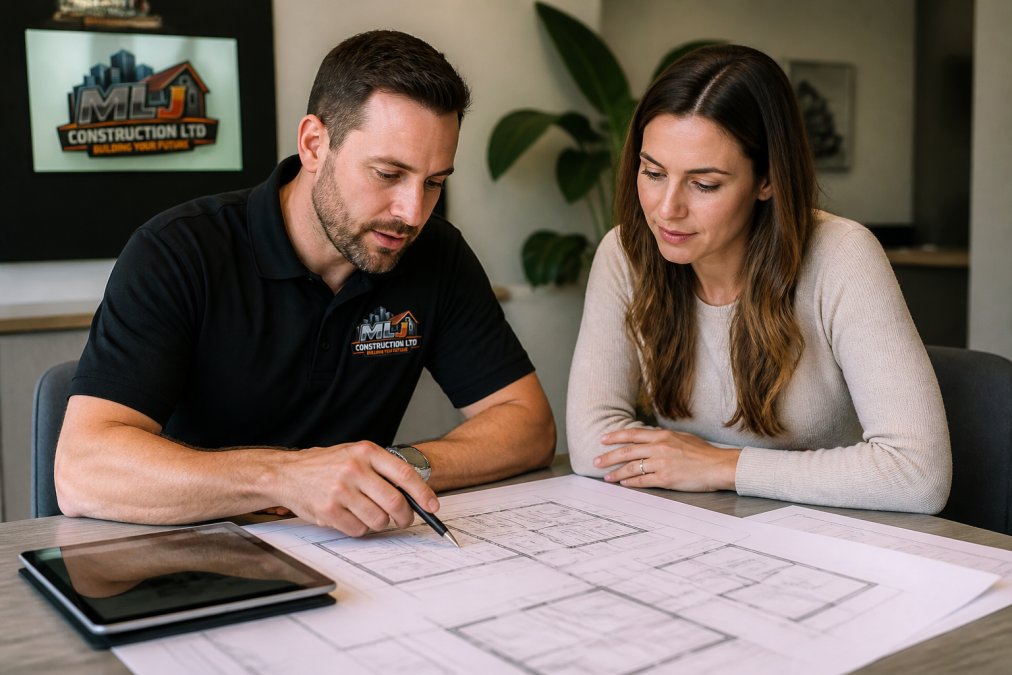
A construction management consultation is a structured process, not a casual conversation. Understanding what happens at each stage removes uncertainty and helps you prepare effectively.
Initial Contact and Scheduling
When you first reach out, the consultant will ask basic questions: project type, location, approximate scope, and timeline. This 10-minute call determines whether the consultant is a good fit and identifies any immediate red flags. If you’re planning a residential kitchen renovation and the consultant specializes only in industrial projects, they’ll likely refer you elsewhere.
The Site Visit and Discovery Phase
The consultant arrives with a checklist. They’ll photograph existing conditions, measure spaces, identify utility locations, and note any structural or code-related observations. For renovations, they’ll assess the building’s age, construction type, and condition. For new construction, they’ll review site access, drainage, soil conditions, and utility availability.
Expect detailed questions:
- “When do you need this complete, and is that deadline flexible?”
- “What’s your total budget, and does that include design fees and permits?”
- “Are there any trades or suppliers you’re already committed to?”
- “Will the building remain occupied during construction?”
- “What’s your priority: speed, cost, quality, or a balance of all three?”
The Walkthrough and Problem Identification
The consultant will walk the site with you, explaining what they observe. They might point out:
- Existing conditions that affect scope (asbestos in older buildings, outdated electrical panels, plumbing that needs upgrading)
- Code compliance issues that will require permits or upgrades
- Sequencing challenges (how to coordinate trades, manage site access, or work around occupied spaces)
- Material or design choices that will affect cost or timeline
They’ll ask you to clarify your vision. If you’re describing a kitchen renovation, they’ll ask whether you want to move plumbing or electrical, keep the existing footprint, or reconfigure the layout entirely. Each choice has cost and timeline implications.
The Preliminary Assessment and Next Steps
Before leaving the site, the consultant will outline their initial observations and next steps. They might say: “I’ll prepare a detailed scope summary, preliminary schedule, and rough budget estimate. I’ll also identify which permits you’ll need and flag any design or code issues we should address with your architect.”
The Follow-Up Meeting
Once the consultant has reviewed drawings, researched local codes, and prepared preliminary estimates, you’ll meet again (in person or by video call). They’ll present:
- A detailed project scope (exactly what’s included and what’s not)
- A preliminary construction schedule with major phases and milestones
- A budget breakdown by trade and category (labor, materials, equipment, contingency)
- A list of required permits and estimated approval timelines
- Any design or code recommendations
- A risk assessment identifying potential problems and mitigation strategies
This is where you ask hard questions. If the timeline is too aggressive, the consultant explains why and offers alternatives. If the budget seems high, they justify the estimate and show where costs are driven. If you disagree with a recommendation, you discuss trade-offs.
What You’ll Receive
Most consultations conclude with written deliverables:
- A project scope document defining what’s included
- A preliminary schedule showing major phases and critical milestones
- A budget estimate broken down by trade and cost category
- A list of required permits and estimated approval timelines
- A risk register identifying potential problems and mitigation strategies
- A recommendations summary addressing design, code, or sequencing issues
- A proposal for the next phase (detailed design, full project management, or both)
These documents become your project foundation. They prevent scope creep, set clear expectations, and give you a basis for comparing quotes from contractors or other consultants.
Timeline and Cost of the Consultation Itself
The consultation process typically takes a few weeks from initial contact to final recommendations. The site visit itself is usually 1 to 2 hours, with research, analysis, and report preparation following. Some consultants charge a flat fee for this service, while others offer it at reduced cost or free if you hire them for the full project.
Common Mistakes to Avoid When Booking a Consultation
Don’t wait until you’re ready to start construction to book a consultation. The earlier you engage a construction manager, the more value they provide. Pre-construction planning prevents expensive changes once work begins.
Next Steps After Your Consultation
After your consultation, you’ll have a clearer picture of your project’s feasibility, timeline, and cost. If you decide to move forward, the next phase typically involves formal design development, detailed estimating, and permitting.
Frequently Asked Questions
What is included in a construction management consultation?
A construction management consultation typically covers project scope review, timeline assessment, budget feasibility analysis, risk identification, and contractor coordination strategy. The consultant examines your site, reviews existing plans or requirements, and discusses your priorities around schedule, cost, quality, and safety. They may also address procurement strategy, subcontractor coordination, and how design-build approaches could benefit your project. The goal is to give you a realistic roadmap and identify potential issues before construction begins.
How much does a construction management consultation typically cost?
Consultation fees vary based on project complexity, size, and scope. Residential additions and kitchen renovations may have different fee structures than industrial construction or commercial development projects. Rather than assume a fixed price, request a quote from your construction manager outlining their consultation fee, what’s included, and how it applies if you proceed with their services. Many firms credit consultation fees toward the final project cost if you hire them.
How do I verify the credentials of a construction management firm?
Ask for references from past projects similar to yours, request proof of liability insurance and bonding, and verify their experience with your project type (residential, commercial, industrial, or institutional). Check whether they hold memberships in professional construction associations. Ask about their team’s certifications, their approach to safety compliance and occupational health, and how they manage contract administration and quality assurance. A reputable firm will provide case studies or examples of completed projects and be transparent about their methods.
Why should I hire a construction management consultant for my project?
A construction management consultant acts as your single point of contact, coordinating architects, engineers, subcontractors, and suppliers. They manage project lifecycle from pre-construction planning through project closeout, controlling budget, schedule, quality, and safety. This coordination reduces costly delays, prevents scope creep, and catches issues early. For whole-home renovations, commercial fit-outs, or industrial projects, professional management ensures design-build coordination, value engineering opportunities, and better resource allocation, ultimately delivering your project on time and within budget.
Booking a construction management consultation is the smart first step for any building project. It clarifies your vision, identifies potential problems before they become expensive, and establishes a realistic plan for success. Whether you’re planning residential additions, commercial fit-outs, or industrial work, professional guidance at the outset saves time, money, and stress. Get a quote from MLJ Construction Ltd. today and take control of your project from day one.