Table of Contents
- What Commercial Construction Project Management Services Actually Do
- The Project Lifecycle: From Pre-Construction Planning to Project Closeout
- Site Supervision, Safety Compliance, and Commercial Construction Fit-Out Safety Regulations
- Subcontractor Management, Procurement, and Supply Chain Logistics
- Quality Assurance, Risk Management, and Change Order Control
- Construction Project Management Fees Ontario: What to Expect
- Technology Integration and Construction Project Management Software Tools
- Design-Build vs. Traditional Construction Management: Which Approach Fits Your Project
- Frequently Asked Questions
Last Updated: October 2, 2026
What Commercial Construction Project Management Services Actually Do
Commercial construction project management services are the backbone of delivering projects on time and within budget. At MLJ Construction Ltd., we’ve learned that the difference between a project that runs smoothly and one that spirals into delays and cost overruns comes down to one thing: coordinated oversight from day one.
A construction project manager orchestrates every moving part: managing budgets, coordinating subcontractors, tracking schedules, ensuring safety compliance, and handling the details that separate successful projects from problematic ones.
Whether you’re overseeing a retail fit-out, restaurant renovation, or industrial work, construction project management services maintain consistent core responsibilities: control costs, maintain schedule, ensure quality, manage safety, and align stakeholders. A single point of contact eliminates coordination chaos.
The Project Lifecycle: From Pre-Construction Planning to Project Closeout
Mistakes in early project phases compound exponentially. A poorly planned budget becomes a nightmare during construction; a vague schedule creates resource conflicts and idle crews.
Design Phase and Architectural Coordination
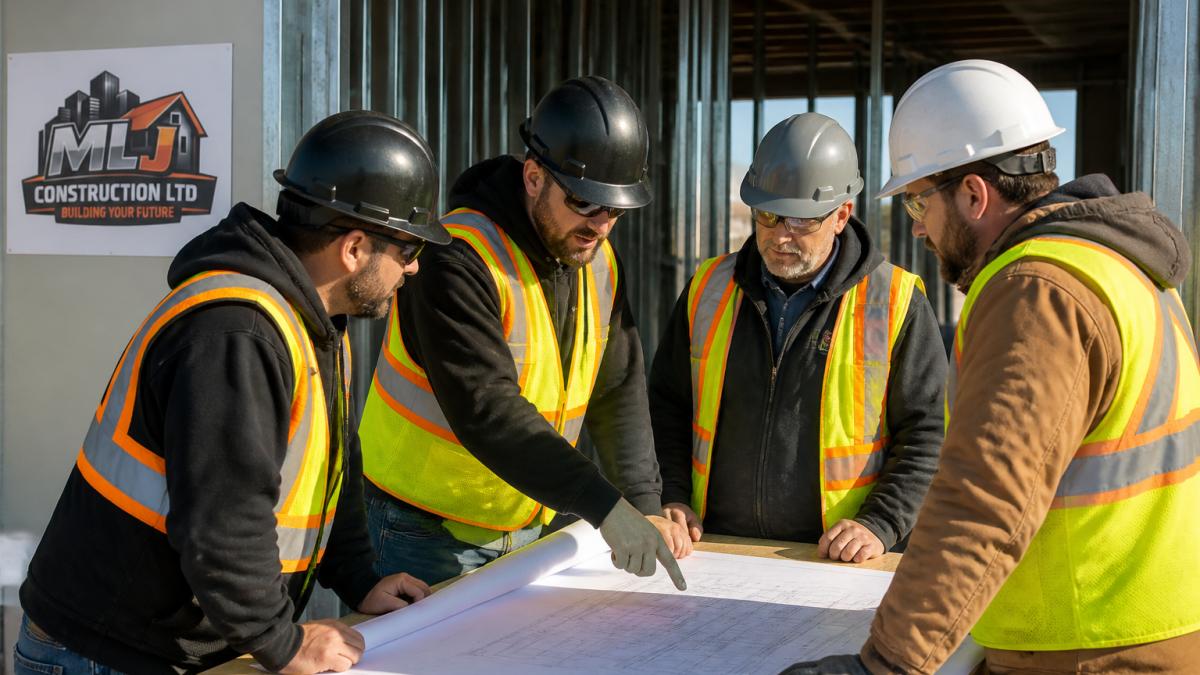
During design, construction project management services coordinate between architects, engineers, and clients through active value engineering, identifying cost-saving opportunities without compromising quality or function.
Architects optimize for design elegance; contractors optimize for buildability and cost. A project manager bridges that gap, asking early: Can we source materials on schedule? Will this detail delay construction? Are there less expensive alternatives that meet performance standards?
Budgeting, Cost Estimation, and Value Engineering
Construction project management services deliver measurable value through active cost control. Comprehensive cost estimation breaks down labor, materials, equipment, and overhead into tracked line items. Rigorous financial oversight during the build phase establishes the necessary foundation for long-term operational efficiency, which remains a critical consideration when transitioning into commercial property management services.
Value engineering reduces costs through material substitution, detail simplification, or specification adjustment, delivering the same outcome for less money or better outcomes within budget.
Construction Scheduling and the Critical Path Method
The critical path method identifies which tasks must be completed on time to avoid delaying the entire project. A project manager knows which delays matter and allocates resources where they move the needle.
A well-managed schedule provides predictability: subcontractors, suppliers, and crews know when they’re needed, reducing waste and costs.
Site Supervision, Safety Compliance, and Commercial Construction Fit-Out Safety Regulations
Site supervision and safety compliance are intertwined.
The Regulatory Framework
A project manager translates these requirements into site-specific protocols:
-
Pre-construction Safety Planning: A site-specific Health and Safety Plan identifies hazards (heights, excavation, electrical, confined spaces), specifies control measures, and assigns responsibilities. The plan is reviewed with subcontractors and updated as work progresses.
-
Building Code Compliance Tracking: The project manager coordinates with the municipal building inspector, submitting required documentation on schedule. Understanding the inspection sequence prevents delays by having work ready when inspectors arrive.
-
Permit and Variance Management: If a design requires a variance, the project manager obtains written municipal approval before construction. Resolving code conflicts during design is far less costly than mid-project discovery.
Daily Site Supervision and Quality Verification
A project manager conducts daily walkthroughs, documenting progress and ensuring work meets specifications.
Quality verification uses checklists tied to specifications, photographs progress, and maintains inspection records. Deficiencies are documented and corrected before re-inspection, preventing costly rework.
Safety Incident Prevention and Reporting
For high-risk industrial projects, a dedicated safety coordinator conducts toolbox talks, performs audits, and maintains incident records. Safety violations trigger immediate work stoppage, hazard correction, and worker retraining.
Documentation and Regulatory Accountability
A project manager maintains documentation demonstrating compliance: signed safety plans, training records, inspection reports, and incident logs. This protects workers and the project owner if regulators inspect or incidents occur.
For regulated industries (healthcare, food service, financial institutions), compliance extends beyond building codes.
The Cost of Non-Compliance
Cutting corners on safety or code compliance creates hidden costs: work stoppages, regulatory investigations, fines, and liability. Thorough compliance prevents costly outcomes and keeps projects on schedule and within budget.
Subcontractor Management, Procurement, and Supply Chain Logistics
Subcontractor management coordinates multiple trades through scheduling coordination, contract management, and performance monitoring. A project manager ensures subcontractors show up on time, complete work to specification, and don’t delay other trades.
Procurement creates constant friction as lead times shift and suppliers run out of stock. A project manager orders long-lead items early and maintains backup suppliers. For specialized work like structural steel, procurement planning is essential.
Supply chain logistics determines whether materials arrive when needed or pile up on-site creating congestion and theft risk. A project manager coordinates delivery schedules, manages site storage, and tracks inventory to keep the project flowing smoothly.
Quality Assurance, Risk Management, and Change Order Control
Quality assurance means inspecting work against specifications and standards. A project manager conducts regular inspections, documents deficiencies, and ensures corrections are made. This protects your investment and prevents costly rework later.
Risk management identifies potential problems, weather delays, supply chain disruptions, design conflicts, and develops contingency plans. A project manager doesn’t wait for problems to emerge; they anticipate them and prepare responses.
Change orders are inevitable. Design changes, unforeseen conditions, or client requests modify the original scope. A project manager documents these changes, calculates their cost and schedule impact, and gets approvals before work proceeds. Without disciplined change order management, projects spiral into scope creep and budget overruns.
| Risk Type | Common Cause | Management Strategy |
|---|---|---|
| Schedule delay | Weather, supply chain issues | Buffer time, contingency planning |
| Budget overrun | Scope creep, unforeseen conditions | Change order discipline, contingency budget |
| Quality issues | Inadequate supervision, unclear specs | Regular inspections, clear documentation |
| Safety incidents | Inadequate protocols, rushed work | Safety training, site supervision |
Construction Project Management Fees Ontario: What to Expect
Construction project management fees vary based on project size, complexity, and delivery method. Fees are typically structured as a percentage of the total project cost, a fixed fee, or a combination of both. Smaller projects might use fixed fees; larger projects often use percentage-based fees because the cost is proportional to the project’s scope.
The value of professional project management typically exceeds its cost. A well-managed project delivers cost savings through value engineering, schedule efficiency, and waste reduction that often exceed the management fee. For a restaurant fit-out or retail renovation where timing affects revenue, keeping the project on schedule has direct financial value.
Rather than guessing at costs, contact MLJ Construction Ltd. for a detailed quote based on your specific project scope. The investment in professional construction project management services pays for itself through better outcomes.
Technology Integration and Construction Project Management Software Tools
Modern construction project management relies on an integrated technology stack that moves beyond isolated spreadsheets and email chains.
Building Information Modeling (BIM) creates a shared 3D digital representation of the project.
Project Management Software (scheduling, budgeting, and task management) tracks the project’s heartbeat in real time.
Field Reporting and Mobile Capture tools enable on-site supervisors to document daily progress, safety observations, and quality issues directly from the jobsite.
Cost Tracking and Accounting Integration connects project budgets to actual spending.
Communication and Collaboration Platforms (shared project portals, daily reports, meeting minutes) create a single location where all stakeholders access project information.
The integration between these tools is what separates effective digital project management from tool sprawl.
A project manager skilled in these tools doesn’t just use software; they design the data workflows that keep the project transparent and responsive to change.
Design-Build vs. Traditional Construction Management: Which Approach Fits Your Project
Design-build combines design and construction under a single contract. The design-build firm is responsible for both the architect’s work and the contractor’s work. This approach reduces coordination friction because there’s one entity accountable for the entire project.
Traditional construction management separates design (architect) from construction (contractor). The project manager coordinates between them, managing the interface and resolving conflicts. This approach gives you more control over the design process and allows you to select architects and contractors independently.
Design-build works best when you have a clear vision of what you want and prioritize speed and cost certainty. Traditional management works best when you want detailed design input and don’t mind managing the architect-contractor relationship.
MLJ Construction Ltd. offers both approaches. Our design-build services simplify the process by combining design coordination with construction expertise, delivering projects on schedule and within budget. For clients who prefer traditional management, we coordinate seamlessly with your chosen architect and engineering team.
When a construction project goes sideways, it’s rarely because of a single mistake, it’s because small issues compound without oversight. Budget variances accumulate, schedule delays cascade, and quality issues get discovered too late.
Frequently Asked Questions
What are the primary responsibilities of a commercial construction project manager?
A commercial construction project manager oversees the entire project lifecycle, from pre-construction planning through closeout. Key responsibilities include budget control, scheduling, site supervision, safety compliance, subcontractor coordination, quality assurance, and stakeholder communication. They act as the single point of contact between architects, engineers, trades, and the client, ensuring the project stays on schedule, within budget, and meets all regulatory requirements and quality standards.
How do construction project management fees Ontario typically work?
Construction project management fees vary based on project scope, complexity, location, and duration. Fees may be structured as a percentage of total project cost. For accurate pricing tailored to your specific project, contact your construction management provider directly for a detailed quote. Transparent fee structures should clearly outline what services are included and any additional costs.
What safety regulations must be followed for commercial construction fit-outs?
Commercial construction fit-outs must comply with provincial building codes, occupational health and safety regulations, and industry-specific standards. Key requirements include proper site supervision, hazard assessments, fall protection, equipment safety, emergency procedures, and worker training documentation. For restaurant kitchen fit-outs, additional food safety standards and ventilation requirements apply. A qualified project manager ensures all regulatory compliance measures are in place and documented throughout construction.
How does a design-build approach differ from traditional construction management?
Design-build combines design and construction services under one contract with a single point of contact, streamlining communication and decision-making. Traditional construction management separates the design phase (architect) from the construction phase (contractor), often requiring the client to manage multiple parties. Design-build typically reduces timeline overlap, improves cost control through integrated planning, and simplifies accountability. However, it requires selecting the right design-build partner early to align vision with feasibility and budget.